Understanding how the Canadian Air Traffic Control system interacts with IFR operations is fundamental to operating safely and legally within Canadian airspace. Whether we are departing from a controlled aerodrome in Toronto or picking up a clearance from an uncontrolled aerodrome in northern Ontario, the relationship between ATC and pilot responsibility remains constant—and frequently misunderstood. This article breaks down the operational realities of how ATC and IFR pilots interact throughout all phases of flight, from clearance to touchdown. We are not covering procedural flying here; we are explaining how the system works and where responsibilities lie.
Who This Article Is For
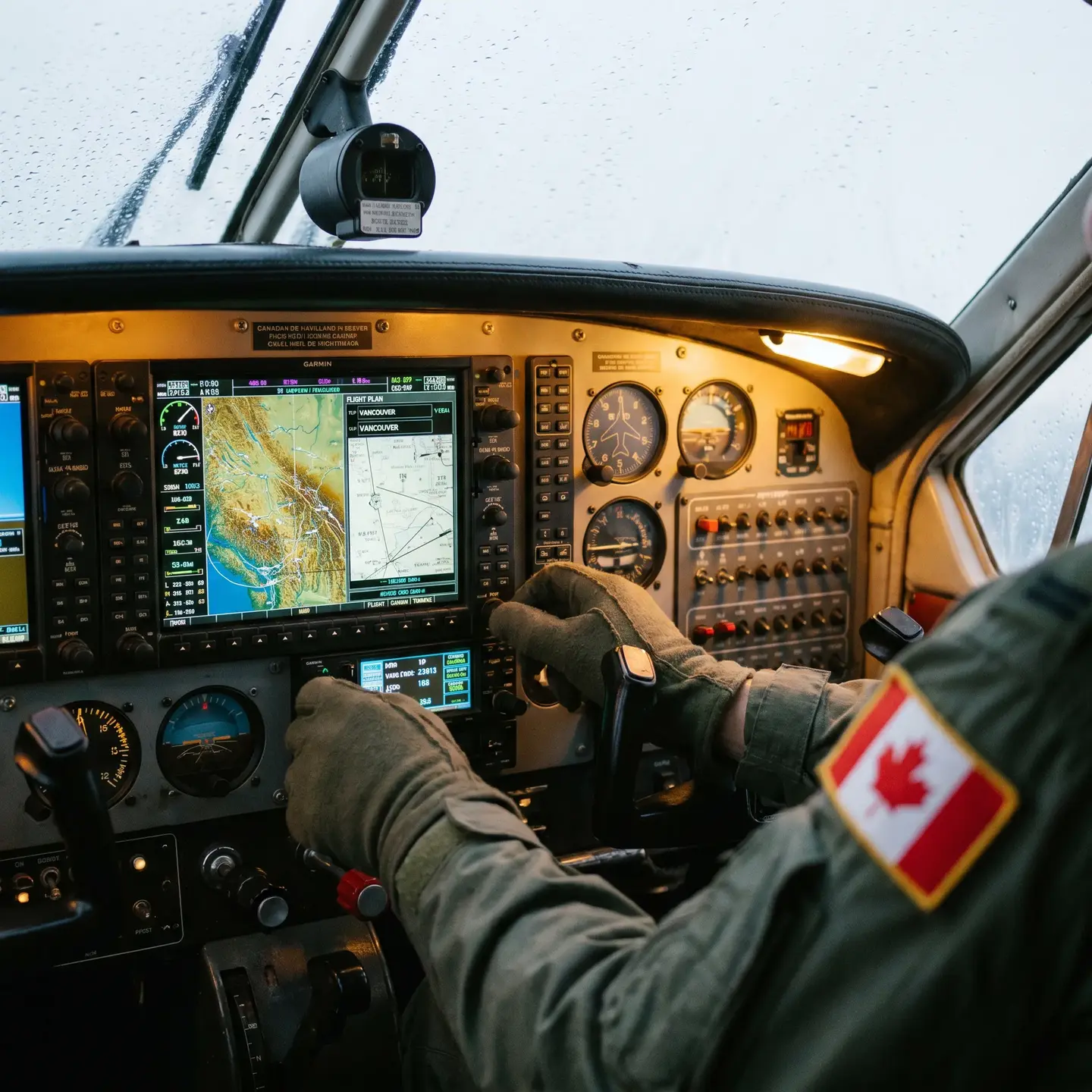
This content is designed for pilots preparing for advanced Transport Canada examinations, particularly those working toward the IATRA Ground School or consolidating IFR knowledge for commercial and airline transport operations. If we are looking for procedural guidance on flying specific approaches or exam tips, this is not the place—those topics are addressed elsewhere in our course materials.
What we cover here is the operational framework: how ATC manages IFR traffic, what clearances actually authorize, and where pilot responsibility begins and ends. This is the foundation that makes everything else make sense.
The Role of ATC in Canadian IFR Operations
In Canada, ATC’s role is to manage traffic, not to remove pilot responsibility. ATC provides two core services to IFR aircraft operating in controlled airspace: separation from other IFR traffic and clearances authorizing entry into and movement through controlled airspace.
The TC AIM RAC Section establishes this division of authority explicitly. When ATC issues a clearance, they are managing the flow of traffic—not assuming responsibility for the safe conduct of our flight. This understanding shapes everything that follows.
IFR Clearances: What They Authorize and What They Do Not
An IFR clearance is a conditional authorization—it is not an all-encompassing safety guarantee. This conceptual anchor must be understood before we proceed further.
What an IFR Clearance Authorizes
When we receive an IFR clearance, ATC is authorizing specific elements:
- Entry into controlled airspace
- A defined route of flight
- A specified clearance limit (typically the destination aerodrome)
- An assigned altitude or flight level
- A transponder code, where applicable
These elements together constitute permission to operate within the controlled airspace system along the specified routing. The clearance integrates our flight into the traffic management picture that ATC maintains.
What an IFR Clearance Does Not Authorize
Equally critical is understanding what an IFR clearance does not provide:
- It does not always guarantee terrain clearance
- It does not imply a clearance to land
- It does not remove pilot responsibility for aircraft performance, personal minima, or legal weather requirements
A clearance to fly a particular route does not mean that route is safe for our aircraft under all conditions. If we are assigned an altitude that we cannot maintain due to performance limitations, or if weather conditions deteriorate below our personal or legal minima, the clearance does not override our obligation to address those issues.
IFR Flow on the Ground: Controlled vs Uncontrolled Aerodromes
The pre-departure phase of IFR flight differs significantly depending on whether we are operating from a controlled or uncontrolled aerodrome. Understanding these differences prevents confusion.
Controlled Aerodromes
At controlled aerodromes, the sequence follows a structured pattern:
- ATIS Review: We listen to the current Automatic Terminal Information Service broadcast to obtain weather, runway, and operational information
- Clearance Delivery: We contact clearance delivery to receive our IFR clearance including route, altitudes, and transponder code
- Taxi Authorization: Ground control provides taxi instructions to the departure runway
- Takeoff Clearance: Tower issues takeoff clearance when traffic permits
Uncontrolled Aerodromes
Departing IFR from uncontrolled aerodromes introduces different requirements:
- A filed IFR flight plan is still required
- An ATC clearance is still required if in controlled airspace
- It is recommended that pilots inform ATC if a flight will not commence within 60 minutes of the proposed departure time stipulated in an IFR flight plan. Failure to do so will result in activating the SAR process.
- At an uncontrolled aerodrome, the initial IFR clearance may contain a time or an event-based departure restriction or clearance cancellation.
SAR planning implications add another layer of responsibility. If our departure is delayed more than 60 minutes after the estimated time of departure filed in our flight plan, we must notify ATC.
The NAV CANADA IFR Phraseology Guide provides the standard communications formats for obtaining clearances in both controlled and uncontrolled environments.
En-Route IFR: Separation, Altitudes, and Pilot Obligations

Once airborne and operating in controlled airspace, ATC provides separation services using established methods. Understanding these methods helps us anticipate controller actions and respond appropriately.
How ATC Achieves Separation
ATC separates IFR traffic through three primary means:
- Vertical separation: Assigning different altitudes or flight levels to aircraft operating in the same airspace
- Lateral separation: Routing aircraft on different tracks that maintain safe horizontal distance
- Longitudinal separation: Maintaining time or distance intervals between aircraft on the same route
Each method has specific minima defined in the Canadian Domestic Air Traffic Control Separation Standards, and controllers select the appropriate method based on traffic, terrain, and available surveillance.
Pilot Obligations During En-Route Flight
While ATC manages separation, we retain specific obligations:
- Maintain assigned altitudes or flight levels precisely
- Report any inability to comply with clearances immediately
- Notify ATC of equipment malfunctions that affect navigation or communication capability
- Comply with assigned headings, speeds, and routing
These obligations exist because ATC separation assurance depends on aircraft being where they are expected to be. If we deviate from assigned parameters without notification, the separation picture that ATC has constructed may become invalid, potentially creating conflicts with other traffic.
Altitude Assignment Logic
ATC assigns altitudes based on multiple factors:
- Magnetic track: Eastbound tracks typically receive odd thousands (FL310, FL350), westbound tracks even thousands (FL320, FL340), following hemispheric rules
- Traffic: Other aircraft in the area influence available altitudes
- Terrain: Obstacle clearance requirements constrain available altitudes
- Surveillance capability: Areas with radar coverage permit different separation standards than non-radar areas
Minimum enroute and obstacle clearance altitudes exist whether or not ATC assigns a specific flight level. Air traffic controllers are human and make mistakes, if there is ever any doubt to clearance or instruction, seek clarification.
Arrival Phase: Clearance vs Expectation
The arrival phase introduces nuances in ATC communications that we must interpret correctly. The difference between an “expect” statement and an actual clearance has significant operational implications.
Expect Statements Are Not Clearances
When ATC transmits “expect RNAV Runway 24 approach,” this is planning information, not authorization. Until we receive an actual approach clearance, we must:
- Remain at our last assigned altitude
- Follow published arrival procedures (STARs, transition altitude requirements)
- Comply with any applicable Minimum Sector Altitudes or Transition Area Altitudes
The expect statement helps us prepare—briefing the approach, configuring navigation systems, planning descent—but does not authorize execution.
What an Approach Clearance Authorizes
An actual approach clearance authorizes:
- Descent below the en-route altitude in accordance with the published procedure
- Use of a named instrument procedure (for example, “Cleared RNAV (GNSS) Runway 06 approach”)
- Navigation to the clearance limit, typically the aerodrome
Without this explicit clearance, we cannot begin the approach procedure, regardless of how confident we are that it is coming.
Radar Vectors and Responsibility Transfer
When ATC provides radar vectors to the final approach course, a temporary responsibility transfer occurs. Radar vectors temporarily shift terrain and traffic responsibility to ATC for those vectored segments. This is because ATC is directing our flight path using radar surveillance and must ensure the vectors provide obstacle clearance.
Once we intercept the final approach course and are cleared for the approach, responsibility for terrain clearance returns to us through compliance with the published procedure altitudes. This handoff of responsibility is seamless in practice but important to understand conceptually.
Approach, Minima, and the Limits of ATC Authority
ATC may clear us for an approach, but this does not allow us to land, another ATC clearance to land is still required if landing at a controlled aerodrome.
What ATC Cannot Authorize
ATC clearing us for an approach does not:
- Authorize descent below published minima
- Override visibility or cloud clearance requirements
- Remove our responsibility to execute a missed approach if required references are not visible
If we are not in a position to execute a landing using normal manoeuvres, or fail to acquire the required visual references at the decision altitude or minimum descent altitude, we execute the missed approach. ATC does not make this decision for us.
The Landing Clearance Distinction
Approach clearance and landing clearance are separate authorizations. Being cleared for an approach does not mean we are cleared to land. At controlled aerodromes, tower must issue an explicit landing clearance before we touch down. At uncontrolled aerodromes, we self-announce and land when the runway environment is clear, but we must have completed the approach in accordance with published minima and acquired visual references.
Communication Failures and Abnormal Situations
Standard procedures exist so that both ATC and pilots can predict aircraft actions during communication failures. This predictability is the foundation of safe IFR operations when normal communications are lost.
Two-Way Radio Failure Under IFR
When we experience complete loss of two-way radio communication during IFR flight, we follow published lost-communications procedures that prescribe:
- Route: Continue on the last assigned route, or if being radar vectored, proceed direct to the fix specified in the vector clearance, then continue on the expected route
- Altitude: Fly the highest of: last assigned altitude, minimum IFR altitude, or expected altitude
- Timing: Commence approach at the expected approach time if one was given, or as close as possible to the estimated time of arrival
The logic underlying these procedures is predictability. ATC can anticipate where we will be and clear other traffic accordingly. Deviating from published lost-com procedures defeats this protection.
Equipment Malfunctions
For equipment malfunctions short of complete communication failure, we advise ATC immediately and follow appropriate safety procedures. If navigation equipment fails, we may require vectors or assistance navigating to a suitable diversion airport.
Emergency Declarations
When conditions warrant, we declare an emergency using standard phraseology:
- PAN PAN: For urgent situations requiring priority handling but not immediate danger
- MAYDAY: For distress situations involving imminent danger to the aircraft or occupants
Clarity in emergency communications allows ATC to provide appropriate assistance without ambiguity about the severity of our situation.
IFR Traffic Interaction: Operational Examples
To ground these concepts in operational reality, consider how ATC and pilot responsibilities interact in common scenarios.
Clearance at Departure
When we receive our IFR clearance at a controlled aerodrome, ATC has reviewed our filed route, assigned an altitude that provides separation from other traffic, and designated a transponder code that will allow radar identification. Once airborne and radar identified, ATC can provide separation services. Until radar identification occurs, separation is achieved procedurally through time and altitude assignments.
Altitude Changes En Route
If we request a higher altitude for better winds or fuel efficiency, ATC evaluates whether that altitude is available given traffic and airspace constraints. They may approve our request immediately, assign an intermediate altitude with an “expect” statement for the desired altitude later, or deny the request due to traffic. Our response is to comply with whatever altitude ATC assigns, understanding that traffic management considerations may not be visible to us.
The Shared Responsibility Loop
IFR operations are a shared responsibility. ATC manages traffic where authorized; pilots retain overall responsibility for aircraft control, navigation, terrain and obstacle avoidance outside protective procedural segments. Neither party operates in isolation.
This shared model means:
- We comply with ATC clearances because they integrate us safely into the traffic picture
- We question clearances that appear unsafe because we have information ATC may lack
- We notify ATC when we cannot comply because maintaining the traffic picture requires accurate information
- ATC issues clearances that assume pilot compliance and competence
When either party fails to fulfil their role, the system’s safety margins degrade.
Canadian System Limits: Surveillance vs Non-Surveillance
Canada’s vast geography means that ATS surveillance coverage—radar and ADS-B—varies significantly by region. High-traffic areas around major cities enjoy comprehensive radar coverage. Remote northern regions may have minimal or no surveillance coverage.
Operations in Non-Surveillance Airspace
In non-surveillance segments, pilots must report their position at compulsory reporting points and whenever requested by ATC. These reports form the basis of how ATC maintains separation between aircraft in a non-surveillance environment, a method known as procedural separation.
Lack of surveillance does not remove ATC authority; it changes how separation is achieved. Instead of radar-based separation with controllers monitoring aircraft positions in real time, separation is achieved procedurally through time-based standards and strict adherence to cleared routes and altitudes.
Operational Implications
In non-surveillance areas, the margin for error decreases. If we are late reaching a reporting point or drift off our assigned altitude, ATC has no way to detect this until our next position report. The separation assurance that radar provides in real time must be achieved through disciplined procedural compliance.
Publications That Support ATC/IFR Interactions
Understanding the Canadian ATC system requires familiarity with the publications that define its structure and rules. These documents are not just procedural references—they establish the framework within which all IFR operations occur.
AIP Canada
The Aeronautical Information Publication (AIP) Canada provides ICAO-aligned definitions of:
- Formal airspace structure and classifications
- Route and service definitions
- RNAV/RNP standards and operational constraints
When we need to understand why a particular airspace is classified as it is or what services are available within it, AIP Canada is the authoritative source.
NAV CANADA IFR Publications
NAV CANADA produces the operational publications such as
- LO/HI Enroute Charts: Depict airway structure, minimum altitudes, and navigation aids
- CAP/RCAP: Canada Air Pilot publications providing arrival, departure, and approach procedures
- CFS (Canada Flight Supplement): Aerodrome-specific information including frequencies, services, and navigation aid details
Conclusion: Defined Roles and Predictable Procedures
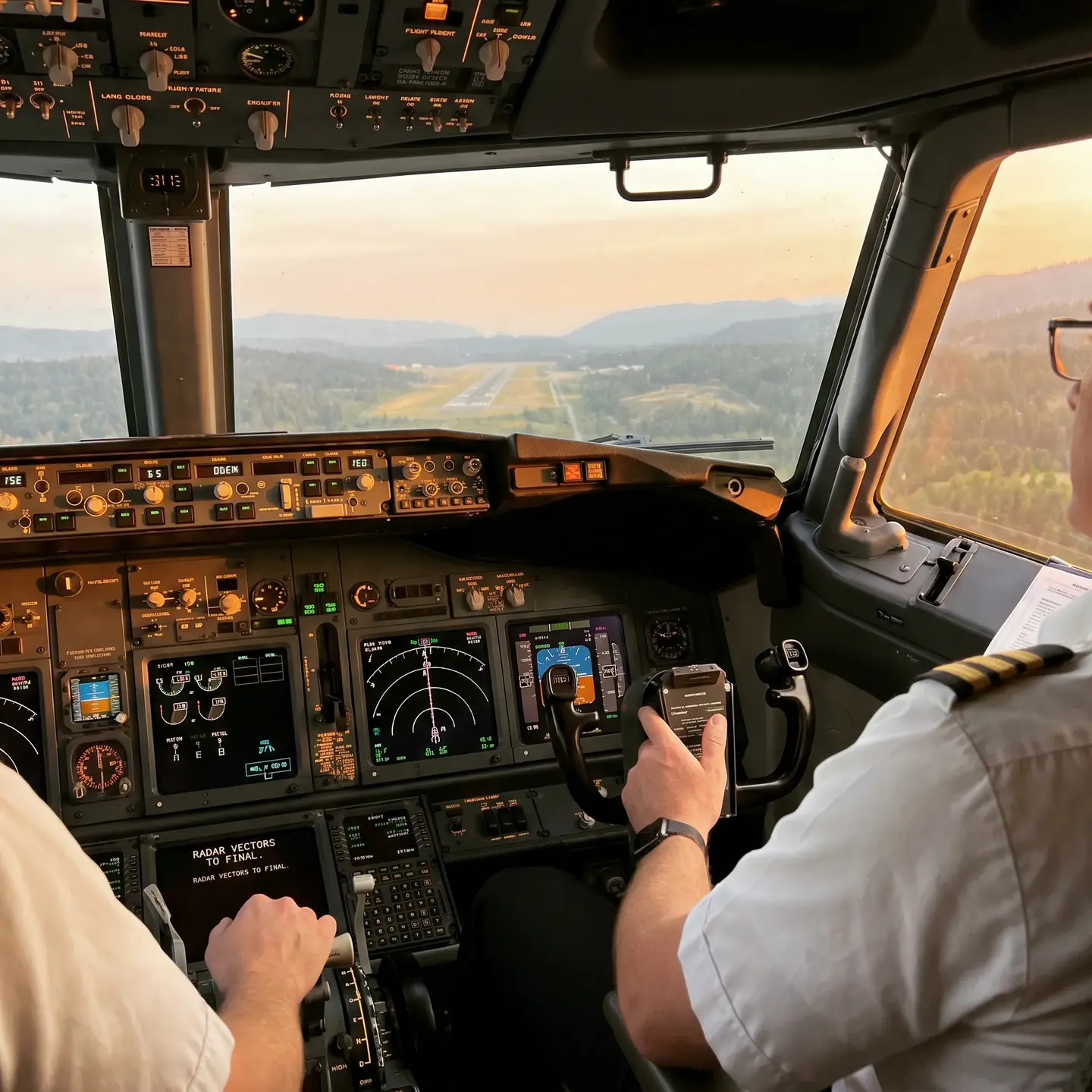
The Canadian ATC system and IFR interactions are governed by structured authority boundaries: ATC manages traffic where authorized; pilots remain responsible for control, compliance, terrain avoidance, and decision making where procedures or surveillance do not provide protection. Understanding how these roles interact—from clearance through approach—is core to understanding IFR in Canada.
Every clearance we receive, every altitude we maintain, and every approach we fly occurs within this framework of shared responsibility. ATC depends on us complying accurately and notifying them when we cannot. We depend on ATC providing separation and accurate traffic management. Neither party can succeed without the other.
Canadian IFR and ATC interactions are about defined roles, predictable procedures, and shared responsibilities—not about ATC “taking over” the flight.
For pilots preparing for the IATRA examination or advancing toward airline transport operations, this understanding is not optional. The examination tests these concepts, and operational flying demands them. Mastering the relationship between ATC authority and pilot responsibility ensures we can operate safely within the system while recognizing exactly where that system’s protections begin and end.
To develop a thorough understanding of advanced IFR concepts and prepare effectively for Transport Canada examinations, explore our IATRA Ground School and Instrument Rating Ground School for comprehensive, Canadian-specific preparation materials designed by experienced airline pilots and flight instructors.
Frequently Asked Questions
What exactly does an IFR clearance authorize in Canadian airspace, and where does our pilot responsibility begin?
An IFR clearance authorizes entry into controlled airspace, a defined route, clearance limit, assigned altitude, and transponder code—nothing more. We retain full responsibility for aircraft control, navigation accuracy, performance limits, and legal minima. Misunderstanding this has trapped pilots into unsafe situations.
How do IFR departure procedures differ between controlled and uncontrolled aerodromes in Canada?
Controlled aerodromes follow a precise sequence—ATIS, clearance delivery for route/altitude, ground for taxi, then tower for takeoff. From uncontrolled strips, like those in northern Ontario, we file IFR, contact ACC or FSS for release and notify if delayed over 60 minutes to avoid unwarranted SAR. When departing from an uncontrolled aerodrome, there may also be time or event-based restrictions associated with the IFR clearance.
During en-route IFR, what separation methods does ATC use, and what are our obligations?
ATC achieves IFR separation by vertical, lateral and longitudinal separation. We must maintain the assigned route and altitudes precisely, report deviations instantly, and notify of ATC of any malfunctions. This disciplined partnership, honed in our IFR training, keeps high-density airspace safe and aligns perfectly with Transport Canada exam scenarios.
What distinguishes an “expect” statement from an actual approach clearance, and why does it matter operationally?
Expect statements—”expect the RNAV Rwy 24 approach”— if for planning only, not authorization. An actual clearance authorizes the procedure.