The IATRA exam stands as one of the most critical written tests in the Canadian pilot licensing pathway, serving as the gateway to multi-crew turbine operations. For pilots who have already completed their CPL and Instrument Rating, understanding exactly how this Transport Canada examination works—its structure, scoring mechanics, and the thinking it rewards—can mean the difference between a confident first-time pass and frustrating rewrites. In this overview, we break down the precise format of the IATRA, explain how Transport Canada scores and administers results, identify the subject areas most likely to challenge candidates, and share practical tips grounded in real operational knowledge. If you need a foundational understanding of what the IATRA actually is and who needs it, we recommend starting with our IATRA Ground School page before diving into the exam mechanics covered here.
Who This Article Is For

This article is designed specifically for Canadian pilots who are actively preparing to write the IATRA exam and need clarity on how Transport Canada structures, scores, and evaluates performance on this test. You will benefit most from this content if you:
- Hold a CPL and Instrument Rating and are preparing for your first multi-crew type rating
- Want to understand exactly what the exam tests before committing to study
- Need to know the rewrite rules and result validity periods for career planning
This article is not a substitute for understanding what the IATRA is, how it compares to the INRAT, or how Canadian ATC procedures work in detail. Those topics are covered in our other dedicated resources. Here, we focus exclusively on the exam itself—its mechanics, its scoring, and the mental approach it rewards.
IATRA Exam Format and Structure
The IATRA (Type Rating for Two Crew Aeroplane or Cruise Relief Pilot) is a Transport Canada written examination that tests advanced knowledge of IFR operations, ATC procedures, and the operational responsibilities that come with flying in multi-crew turbine environments. The Transport Canada IATRA Study and Reference Guide (TP 13524) serves as the authoritative document outlining what candidates must know.
Core Exam Parameters
The IATRA follows the standard format for Transport Canada advanced written examinations:
- Question type: Multiple-choice
- Number of questions: 50
- Time permitted: 2 hours
- Pass mark: 70% (35 correct answers minimum)
- Language options: English or French
Unlike some examinations that require candidates to pass individual subsections, the IATRA does not mandate sub-section pass marks. Transport Canada may track weak knowledge areas for internal analysis and candidate feedback, but these do not independently determine pass or fail status. Your overall score is what matters.
What You Can Bring to the Exam
Candidates are permitted to bring:
- A pencil for rough work
- A non-programmable electronic calculator (memory must be cleared before and after)
- Navigation tools such as rulers, protractors, and flight computers (E6-B or equivalent)
Computers, tablets, and calculators capable of storing or displaying text are prohibited. No reference materials, textbooks, or notes may be brought into the examination room.
Scoring and Result Policies
Understanding how Transport Canada handles scoring, result validity, and rewrite requirements is essential for planning your IATRA attempt strategically.
How Scoring Works

Each of the 50 questions carries equal weight. There is no partial credit—each question is either correct or incorrect. Transport Canada does not release detailed answer keys; scoring is based on official marking logic defined by TC and the associated exam guide. After completing the exam, candidates receive a score report that includes identification of weak knowledge areas, but the specific questions answered incorrectly are not disclosed.
Result Validity Period
A passing IATRA result remains valid for 24 months for the purpose of obtaining a two-crew aeroplane type rating.
We recommend timing your IATRA attempt so that the 24-month validity aligns with your anticipated timeline for reaching type-rating eligibility and receiving a job offer or training opportunity.
Rewrite Rules After a Failure
If you do not achieve the 70% pass mark, Transport Canada imposes waiting periods before you can attempt the exam again:
- First failure: A minimum 14-day waiting period before rewriting
- Subsequent failures: Extended waiting periods, typically 30 to 180 days depending on the number of attempts
These rules exist to ensure candidates engage in genuine remedial study rather than simply reattempting without preparation. If you fail, use the weak-area feedback to target your study efforts before booking another attempt.
Primary Subject Areas Tested
The IATRA covers a focused set of topics designed to assess whether a pilot is ready for the operational demands of multi-crew IFR flying. Transport Canada’s published Weak Knowledge Areas advisories identify recurring problem topics across advanced exams. Below, we break down the primary subject areas with specific attention to where candidates commonly struggle.
IFR Operating Procedures
This is arguably the most critical subject area on the IATRA. Candidates must understand how IFR procedures change between:
- Controlled vs uncontrolled airports
- Departures vs arrivals
- En-route flow vs terminal procedures
Common weak area: Transport Canada analysis shows that IFR departures from uncontrolled airports are a recurring weak area. Many candidates incorrectly assume that operating under IFR means ATC control begins from brake release. In reality, at uncontrolled airports, pilots are responsible for their own separation until entering controlled airspace and establishing contact with ATC.
ATC Rules and Flight Planning Logic
The exam tests rules governing:
- Filing flight plans (IFR vs VFR, required elements, filing timeframes)
- IFR entry and exit from controlled airspace
- The division of responsibility between pilot and ATC
Weak performance trend: Airspace classification and traffic rules are not deeply internalized by many candidates. Knowing the boundaries is not enough—you must understand what responsibilities transfer at each boundary and what actions you can and cannot take without explicit clearance.
Radio and Navigation Theory
IATRA candidates must know not just how to identify navigation aids, but why navigation systems behave as they do. This includes:
- Limitations of various nav systems (VOR, NDB, DME, GPS)
- Signal logic and coverage considerations
- System redundancy and failures
Relevant trend: Radio and navigation theory misunderstandings—such as DME slant error and GPS integrity logic—appear as weak areas in other advanced exams and are likely relevant to IATRA performance. Candidates who treat nav theory as simple “fact recall” rather than operational understanding tend to struggle.
Meteorology Interpretation for Operational Decisions
Weather knowledge on the IATRA is not about reciting cloud types or frontal theory. It is about interpretation of METAR, TAF, GFA, and other products. You must be able to tie weather interpretation to decisions on:
- Alternate selection and legality
- Fuel planning and reserves
- Approach legality based on forecast conditions
The exam rewards candidates who can look at weather products and make operational decisions—not those who simply decode symbols without context.
Integrated and Multi-Topic Logic
One of the defining characteristics of the IATRA is that questions often integrate multiple subject areas:
- Navigation + weather + planning
- Airspace + ATC + communication
- Performance + weather + alternate requirements
Critical fact: Transport Canada weak-area data shows that siloed knowledge harms performance. Candidates who study each topic in isolation—without practicing how they connect in operational scenarios—tend to underperform. The exam rewards operational reasoning and integration, not rote memorization of isolated facts.
NAV CANADA IFR Phraseology Clarity
Misunderstanding standard IFR phraseology is a common source of exam errors. Two particular misconceptions deserve explicit attention.
Misconception: “When Ready” Means Full Discretion
The phrase “WHEN READY” allows the pilot to choose when to begin a climb or descent. However, once begun, no intermediate level-offs are permitted without explicit clearance. This is a source of common error on the exam and in real operations.
For example, if ATC says “When ready, climb to FL350,” you may delay initiating the climb, but once you begin, you must climb continuously to FL350 unless you receive new instructions. You cannot stop at an intermediate altitude on your own initiative.
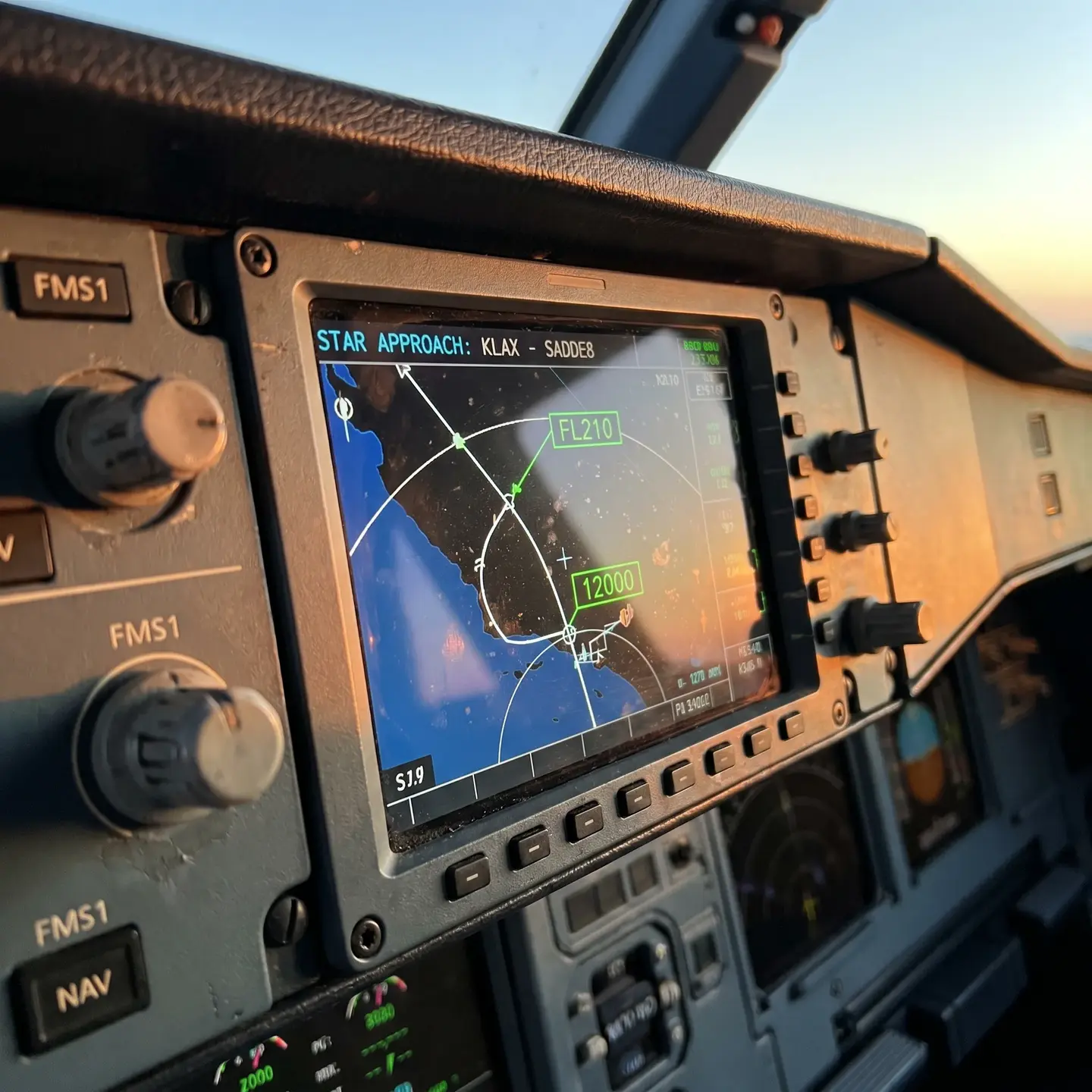
Misconception: “A STAR clearance” Equals Full Profile Authorization
This is one of the most operationally significant distinctions candidates must understand:
- Lateral routing (the STAR track) is typically authorized once cleared
- Vertical profile control (descent) is not authorized until ATC explicitly clears it
You may not descend below your last assigned altitude without explicit ATC clearance, even if the STAR shows a lower altitude at your position. This distinction is tested repeatedly and catches candidates who assume “a STAR clearance” means unrestricted descent.
Study Strategies
Based on how the IATRA is structured and what it rewards, we recommend the following preparation strategies.
Use Transport Canada-Aligned Resources
The TP 13524 Study Guide is your authoritative reference. Any ground school or question bank you use should be explicitly aligned with its syllabus. Our IATRA Ground School is built directly around this guide’s subject areas.
Practice with Realistic Question Banks
Use question banks that replicate Transport Canada’s style, including performance charts, weather products, and multi-step scenario questions. Our IATRA Question Bank provides 15 full-length practice exams designed to mirror the actual exam format and difficulty level.
Aim for 80-85% on Practice Exams Before Writing
A common benchmark among successful candidates is achieving consistent scores of 80-85% across multiple full-length practice exams before booking the real test. This buffer accounts for exam-day nerves and the inevitable presence of unfamiliar question variations.
Study Integration, Not Just Topics
Do not study each subject in isolation. Practice questions that combine navigation, weather, and planning logic. Build mental models that connect airspace rules to ATC communication to operational decisions. The exam rewards candidates who think like multi-crew pilots, not those who have memorized a checklist of facts.
Review Weak Areas Systematically
If your practice exams reveal consistent weakness in certain domains—IFR departures from uncontrolled airports, alternate weather minima, or navigation system limitations—dedicate focused study time to those areas before your exam attempt.
What This Article Does Not Cover
To keep this overview focused and avoid overlap with our other IATRA resources, we have intentionally not included:
- A detailed explanation of what the IATRA is—see our IATRA Ground School page
- In-depth Canadian ATC system explanations—covered in dedicated ATC articles
- Procedural flight skills and approach procedures—covered in flight procedures content
- Comparisons between INRAT and IATRA—covered in dedicated comparison content
Final Perspective
The IATRA exam evaluates whether a candidate can think operationally about IFR and ATC system boundaries, interpret real Canadian ATC rules and procedures, and apply procedural logic to integrated scenarios—not whether they can recall isolated facts in theory. Success comes from understanding how multi-crew IFR operations actually work, not from memorizing question banks without comprehension.
Approach your preparation with the mindset of a professional pilot joining a two-crew cockpit. The exam is designed to verify that you belong there. With structured study, realistic practice, and a focus on operational integration, a confident first-time pass is well within reach.
Frequently Asked Questions
How is the IATRA exam structured, and what does that mean for our time management?
The IATRA is a 50‑question, multiple‑choice exam with a 2‑hour time limit and a 70% pass mark (35 correct). Every question is worth the same, and there are no sectional pass requirements. Operationally, this means we can afford to park a time‑consuming question and move on.
How does Transport Canada handle scoring, validity, and rewrites—and how should we plan around that?
Transport Canada scores each question as simply right or wrong and provides only a total mark plus weak knowledge areas. A pass is valid for 24 months for two‑crew type-rating purposes. If we fail, we face a 14‑day minimum wait initially, then longer delays after repeated failures. From an ATPL-career planning standpoint, we should schedule the exam so that the 24‑month window aligns with reaching 250 hours and realistic hiring or type-rating opportunities.
Which IATRA subject areas typically cause us the most trouble in the exam?
The recurring pain points align closely with real IFR operational traps. IFR departures from uncontrolled airports routinely catch candidates who assume ATC separation from brake release. Airspace classification and responsibility boundaries are another weak area, especially who is responsible for what, and where. Radio/nav theory—DME slant error, GPS integrity, and system limitations—also bites those who studied who memorize. Finally, multi-topic scenario questions expose anyone who can recite rules but cannot integrate them into a coherent operational decision.
How does NAV CANADA phraseology like “WHEN READY” and “CLEARED STAR/APPROACH” get tested on the IATRA?
The exam probes whether we truly understand the control of vertical profiles. “WHEN READY” gives us discretion on when to start, not how we climb or descend; once initiated, we climb or descend continuously to the cleared level unless ATC amends it. Likewise, being cleared a STAR authorizes the lateral track only. We must not leave our last assigned altitude without explicit descent clearance—an area where many candidates, and some new FOs, routinely bust.
What study approach best mirrors the IATRA?
The IATRA rewards integrated, operational reasoning rather than isolated fact recall. We should use Transport Canada–aligned material (TP 13524 as the core) and realistic question banks that combine weather, performance, airspace, and ATC into single scenarios. A prudent target is 80–85% on multiple full-length practice exams before booking the test. We then debrief our weak areas and apply focused remedial study before exam day.