Aircraft Performance and Minimum Climb Rates
Example
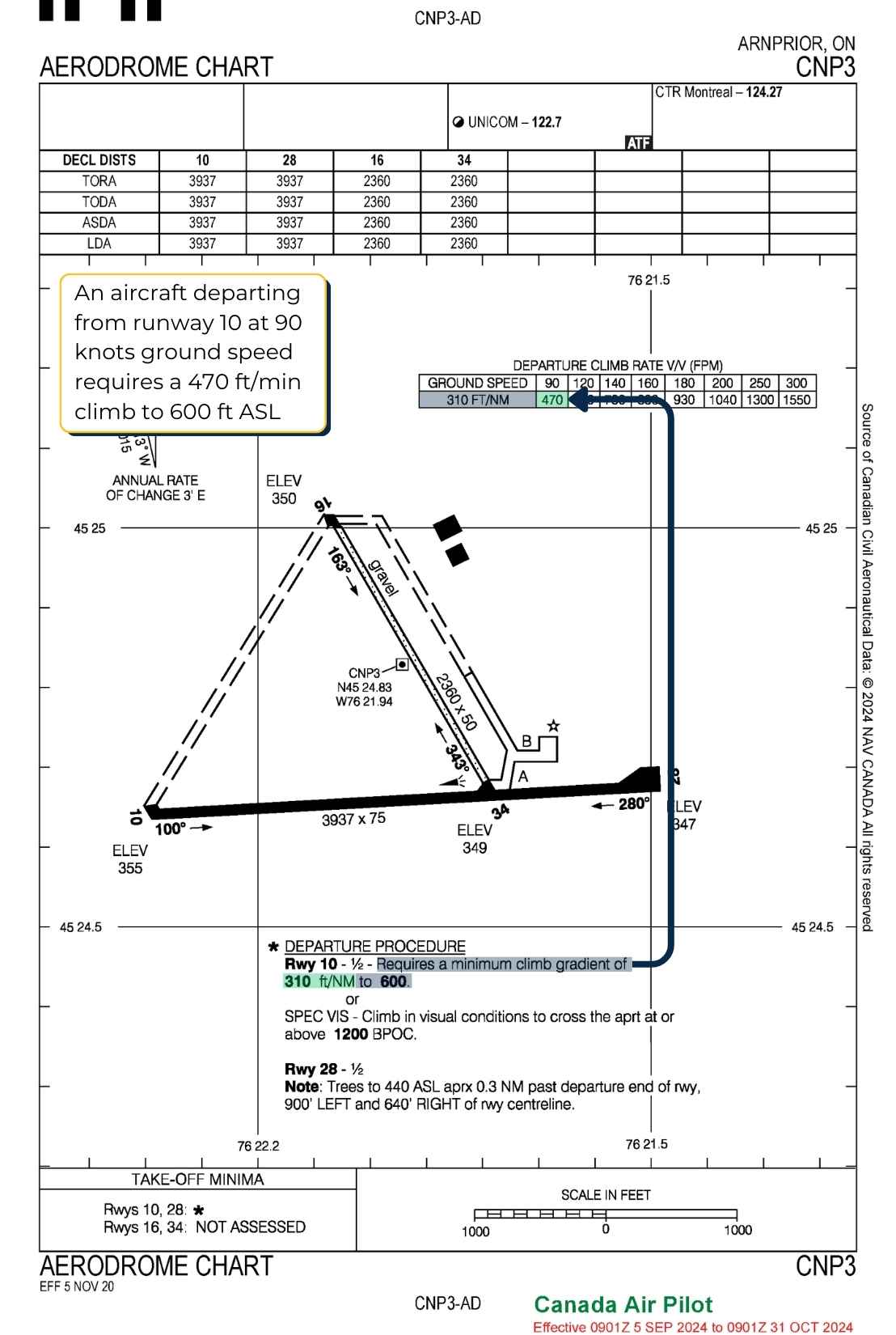
CNP3 is a small aerodrome with no published SIDs and a simple ODP described in a few lines on the aerodrome chart. Despite its simplicity, departures from runway 10 must maintain a climb gradient of at least 310 ft/NM. The required climb rate for a given ground speed can be calculated Using the Departure Climb Rate table provided on the aerodrome chart.
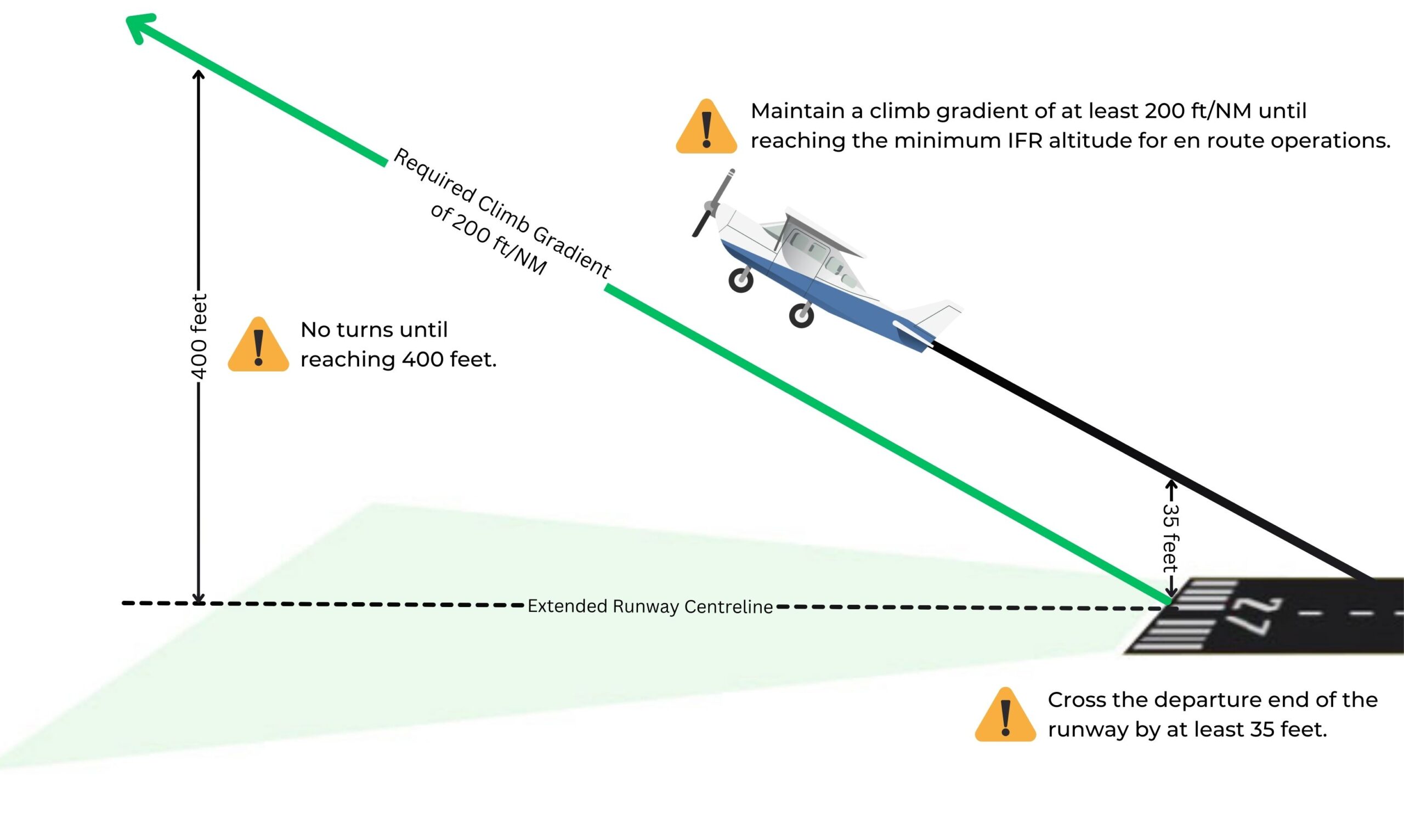
For example, if the planned ground speed during the climb is 90 knots, a minimum climb rate of 470 ft/min is required until passing 600 ft ASL. Above 600 ft ASL, the aircraft must continue climbing at a minimum of 200 ft/NM until reaching a minimum IFR altitude for en route operations. At 90 knots, that corresponds to a climb rate of approximately 300 ft/min.
Where aircraft limitations or other factors preclude the pilot from following the published procedure, it is the pilot-in-command’s responsibility to determine alternative procedures which will take into account obstacle avoidance.
Conversion Table
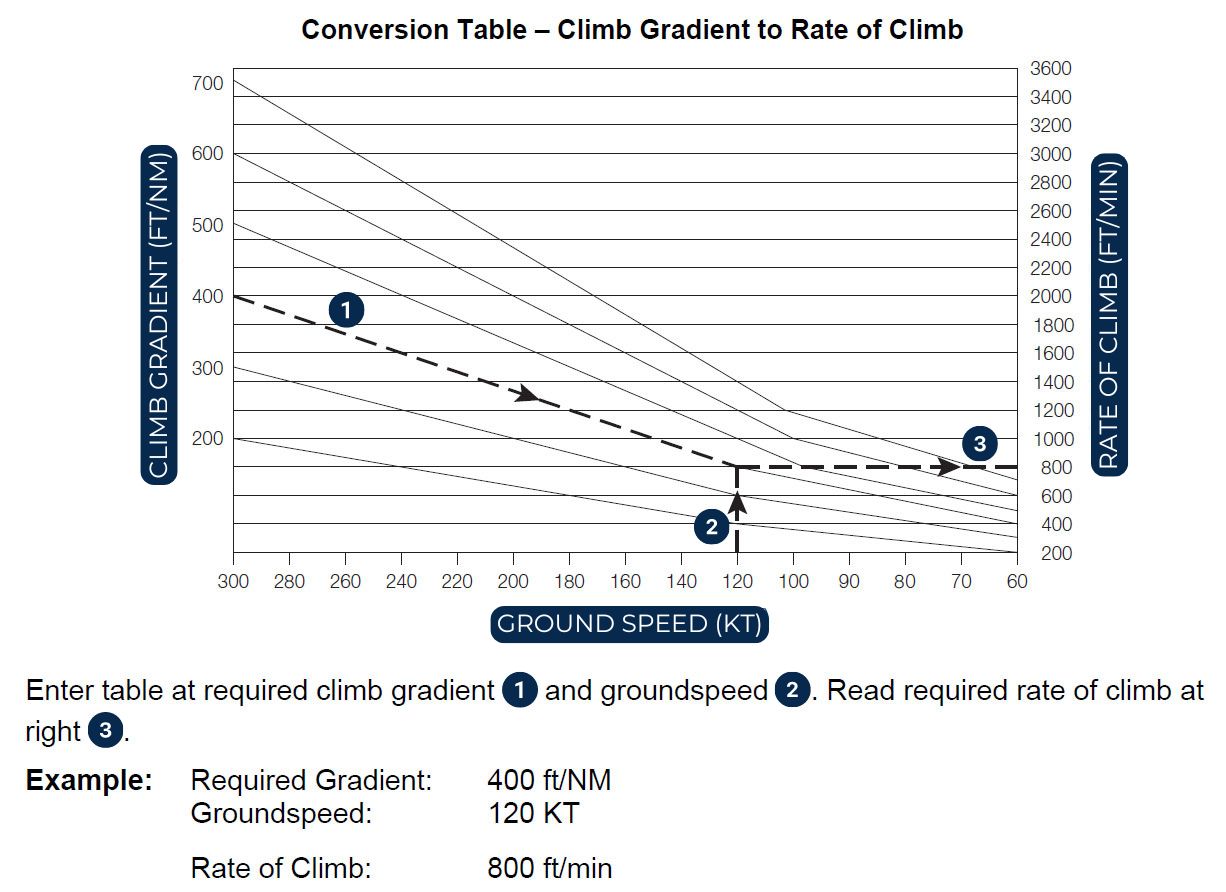
When departure procedures lack a published climb rate table, a conversion chart in the CAP can be used to determine the required climb rate.